Dr. Kiran Rajneesh, MD
A board-certified neurologist and fellowship-trained pain medicine specialist practising in the Houston area, and current Chair of the Pain Section of the American Academy of Neurology.

Two specialties, deliberately combined
Most patients with chronic pain move between specialists. A neurologist investigates the nerves; a pain physician treats the pain. The two conversations rarely happen in the same room.
Dr. Rajneesh trained in both. After completing his neurology residency at the University of Vermont Medical Center, he went on to a multidisciplinary pain medicine fellowship at the Cleveland Clinic — one of the few programmes that trains physicians across the full range of pain management, from medical therapy to image-guided intervention.
He is board-certified in both neurology and pain medicine. In practice, that means the same physician who works out why a nerve is producing pain is also the one qualified to treat it.
Where Dr. Rajneesh trained
Board Certification
Neurology · Pain Medicine
Fellowship
Pain Medicine (multidisciplinary)
Cleveland Clinic Foundation, Ohio
Residency
Neurology
University of Vermont Medical Center
Internship
Internal Medicine
University of Louisville School of Medicine
Medical Degree
M.B.B.S., 2003
M. S. Ramaiah Medical College, India
Fellowship of the AAN
Fellow, American Academy of Neurology (FAAN)
Contributing to how pain is taught and treated
Dr. Rajneesh serves as Chair of the Pain Section of the American Academy of Neurology, having previously held the role of Vice-Chair. In that capacity he has directed continuing education courses on spine pain at the Academy’s annual meeting — teaching other neurologists how to evaluate and manage it.
Before relocating to Texas, he was Director of the Neurological Pain Division at The Ohio State University Wexner Medical Center in Columbus, Ohio, where he built and led the neurological pain service.
He is a Fellow of the American Academy of Neurology and a member of the American Academy of Pain Medicine.
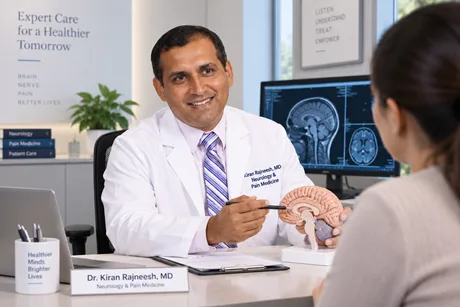
How Dr. Rajneesh works with patients
Diagnosis comes first
Pain is a symptom. The evaluation begins with a full history and neurological examination to establish what is producing it, before any treatment is proposed.
The whole picture
Prior imaging, nerve studies, medication history and treatments already tried all inform the plan — so you are not repeating steps that have already failed.
Explained without jargon
You should be able to describe your own diagnosis and your treatment plan to someone else by the time you leave.
Reviewed over time
Chronic conditions change. Follow-up exists to check what is working and to change what is not.
Where Dr. Rajneesh holds privileges
Memorial Hermann Pearland Hospital
Pearland, Texas
Memorial Hermann Southeast Hospital
Houston, Texas
HCA Houston Healthcare Clear Lake
Webster, Texas
Considering a consultation?
Dr. Rajneesh is currently accepting new patients across all three clinic locations.